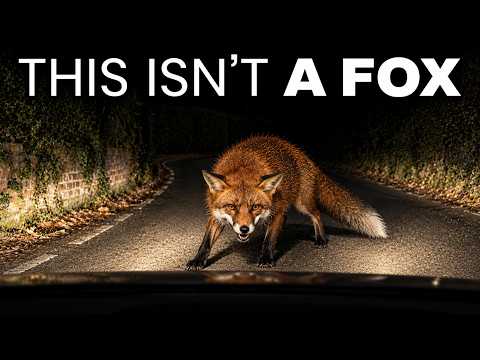
We hit 100 dead foxes (reported) in Bristol on Wednesday. Today I listed foxes 101 and 102 and awaiting info on (possibly) 103.
When vixens die and they are lactating then cubs die. We've had cases in the past of where very young cubs have just been seen wondering about eating any vegetation they can -usually twigs.
Whatever part of the country you are ion (or outside the UK):
PLEASE do not be that ignorant "I really do not care" driver/walker. If you find a dead fox or collapsed fox check if it is lactating (extended teats) and REPORT it asap as cubs may need rescuing.
Earth is here for more than one day. Fund raiser, chance to get attention for whatever.
BUT there are people who try to save the environment and species 365 days of the year, every year. That doesn't matter, though as the "big bodies" don't make cash from them.
CARE about the planet 365 days a year not do something one day and feel proud you have "just saved the Earth"
In fact, for the UK it is just two faced hypocrisy as people dig up hedgerows and trees are cut down to make drive ways for their cars or gardens are concreted over because "less hassle to maintain" and wildlife homes are destroyed because "We want the fox and cubs out so we can put down new decking/a new shed" and "How do I get rid of the badgers in my garden?"
To put it bluntly; the UK is a shit hole when it comes to protecting the environment and wildlife and I've been working on this 50 years so I've seen the rot set in.
It is sad to think that it is only the 22nd April and we have reached 100 dead foxes reported. With lactating vixens dying the death toll would be much higher if we knew the number of cubs they had that would die once the mother was gone.
A pack of five wolves was found dead near the Parco Nazionale d'Abruzzo Lazio e Molise in central Italy, sparking an investigation into a potential mass poisoning.
According to a Facebook post from the national park, a park ranger found the dead wolves while on patrol in the San Francesco area on Wednesday, April 15. The park's Anti-Poison Dog Unit was called in to investigate the area and discovered "remains that suggest the presence of poisoned bait."
Two wolves standing in a grassy forest clearing facing forward.
Getty
The bodies and suspected bait were seized by the Sulmona Public Prosecutor's Office, which will also be leading the investigation into the responsible party. On April 16, the materials were transferred to the Experimental Zooprophylactic Institute of Abruzzo and Molise headquarters in Avezzano, Italy, for further examination into the wolves' cause of death.
As noted in the post, this is the second recent incident of a suspected mass poisoning in the area within days, the first occurring in the Pescasseroli area. In that event, the death investigation was a coordinated effort between the park's rangers, the Carabinieri Forestry Corps, and the Sulmona Prosecutor's Office.
"These are extremely serious acts that deserve firm and unequivocal condemnation, not only because they are illegal," stated in the post, "but also because they damage a priceless natural heritage and are incompatible with an informed and responsible civil society."
The post also highlighted the growing, controversial debate over the management of the wolf population, as the species threatens the local Marsican brown bear, described as a "symbolic and particularly vulnerable species whose conservation is a priority." The park warned that though the wolf is a threat, "any form of illegal action and do-it-yourself justice" will not be accepted.
Never miss a story — sign up for PEOPLE's free daily newsletter to stay up-to-date on the best of what PEOPLE has to offer, from celebrity news to compelling human interest stories.
Officials will continue to investigate the area for further evidence of poison bait, and also stressed the importance of the community's cooperation to discourage and prevent the use of poison baits against wildlife.
As highlighted by the park: "Only through the joint commitment of institutions and civil society can we effectively combat such serious and unacceptable phenomena, which have no place in a civilized and informed community in 2026."
Sometimes the frustration makes me want to scream.
Well, I heard from two people in Europe that my fox work is unique. I find that hard to believe but then I got the latest response from Germany re. the Fox Death Study resaults:
Dear Terry,
Thank you for your message to NABU.
NABU does not conducting any specific research into foxes currently, and unfortunately we are not aware of any other projects that investigate the various causes of death among foxes in more detail.
This explains why zoologists in Norway have no idea that large "mountain foxes" were exported to England -none have done the research. It explains why zoologists just think EU DNA in foxes and other UK species is normal -they have no idea of the mass importing of animals to continue hunting after native species were exterminated. It shows why, despite the historical pictorial evidence for there having been an Old fox type in Western Europe zoologists believe there have only ever been red foxes (Vulpes vulpes).
It is far easier to teach and keep pushing established dogma than it is to spend years accumulating files and reading through old books and journals AND scientific papers.
We are in the year 2026 and and bleat on relentlessly about wildlife welfare in third world countries yet ignore our native wildlife.
I get asked some odd questions. In the last three days I have had people ask me about genital infections in fox cubs. Luckily I keep all sorts of strange info so here you go.
(c)2026 British Veterinary Association
Genital infections and related issues in fox cubs, particularly within the context of wildlife rehabilitation, often stem from environmental factors, infections from the mother, or lack of proper maternal care.
Canine Herpesvirus (CHV): While studies show CHV is pathogenic to European red foxes, causing respiratory disease and mortality in adult experiments, it is also known to be shed in genital secretions and can be fatal to young cubs.
Parasitic Infection (Toxoplasmosis): Fox cubs are highly susceptible to Toxoplasma gondii. This parasite can be passed from a vixen to her unborn cubs (prenatal infection). It can cause neurological symptoms, such as lack of fear and coordination, and can be fatal.
Maternal Care and Hygiene: In the first two weeks of life, fox cubs cannot urinate or defecate on their own; they rely on their mother to lick their genital and rectal areas (perineum) to stimulate the perigenital-bladder reflex. Lack of this stimulation (e.g., if the mother dies) can cause severe, fatal retention of waste products, which may be mistaken for or complicate genital infections.
Infections from Dehydration/Wounds: Rescued cubs are frequently found dehydrated or with injuries from predators or netting. These wounds can become infected and, in some cases, occur on or near the hindquarters.
Worm Burdens: Young fox cubs are more susceptible to internal parasites, such as hookworms (Uncinaria stenocephala) and roundworms (Toxocara canis), with high worm burdens found in cubs compared to adults. These can lead to weakened immune systems and increased susceptibility to other illnesses.
ScienceDirect.com +8
Rehabilitation centres frequently treat these infections with antibiotics and supportive care, particularly for dehydrated or injured cubs.
Because physical evidence would prove what I believe I sent this to the Hong Kong Biodiversity Museum:
Hello.
My name is Terry Hooper and I specialise in wild canids -I set up the British Fox and Wild Canid Study in 1976. For some years I have tried to find anyone with a taxidermy specimen or photograph of the fox that once lived in Hong Kong. I wondered whether your Museum might have either? What I found out I posted on my blog. I look forward to hearing from you.
A long-term study led by Professor Stephen Harris and his team at the University of Bristol uncovered surprising behavioral patterns in red foxes(Vulpes vulpes).
After radio collar tracking urban fox populations for over 25 years, the research found that Dog foxes are remarkably loyal, often staying single for the rest of their lives if they lose their mate. This loyalty was thought to be linked to Dog fox role in raising offspring and maintaining territory stability.
Vixens, whose reproductive success depends on securing a mate each breeding season, tend to form new partnerships relatively quickly.
The study highlights the contrasting strategies between the dog fox and vixens: while males invest in long-term pair bonds and territorial defense, females prioritize reproductive timing and opportunity.
This research offers rare insight into the complex emotional and social dynamics of wild animals and challenges the assumption that monogamy is rare in mammals.
A new study into the exclusion tactics adopted by urban foxes suggests that the transient nature of animal territory is a result of a complex system of individual-level interactions.
The size of an animal’s territory is ultimately dependent on how long it can exert its control before intruders cross the boundaries into its space. The precise nature of such changeable territorial boundaries is revealed in a new study which offers fresh insights from the combined perspectives of biological sciences, mathematics and engineering.
Researchers from the University of Bristol used thirty years of data regarding the movements of the urban red fox to construct and verify a mathematical model on which their analysis was based. A trade-off between two factors emerged as key determinants of territoriality – the time necessary for an animal to move between its own boundaries and the time span during which the fox could maintain its scent trail within that territory.
In 1994, when a disease called sarcoptic mange infected and killed most of Bristol's fox population, Professor Stephen Harris noticed that as the animals on one territory died, the neighbouring animals were able to move in and take over within a matter of three or four days. He assumed that this was because the scent marks of the original fox population were no longer fresh.
This new study, published in PLoS Computational Biology, shows how important it is for a fox to renew its scent marks frequently, further demonstrating the transient nature of populations, and disputing previously held beliefs that scent marks serve as a long-term message and indicator of territorial boundaries.
Lead author Dr Luca Giuggioli, a Complexity Sciences lecturer in the Department of Engineering Mathematics and the School of Biological Sciences, said: “Understanding how organisms move and interact has implications far beyond behavioural ecology. This model may, for instance, shed light on the processes responsible for the formation of territorial boundaries in early human hunter-gatherer societies, and eventually help predict how the size of modern day countries will evolve.”
Co-author Jonathan Potts added: “Our theoretical framework might also inspire designs in collective robotics. From very simple rules, the individuals divide space into territories, and if one individual should fail, its territory is taken over. Building an army of territorial robots that move according to these rules could be an efficient and robust way to deal with dangerous tasks over a wide spatial area, such as clearing minefields.”
Dr Giuggioli added: “This study is one classic example in which answering a biological question with the help of Complexity Sciences tools provides far reaching results, challenging long-held preconceptions and opening up the possibilities in areas of science unrelated to where the questions originated.”
Paper: Animal interactions and the emergence of animal territoriality, by Luca Giuggioli, Jonathan Potts, Stephen Harris. Published in PLoS Computation Biology.
Leptospirosis, caused by pathogenic spirochaetes belonging to the genus Leptospira, is a globally distributed zoonosis that can affect many species of domestic and wild animals, and humans. The red fox (Vulpes vulpes) is a native species in Croatia and, due to constant food availability and lack of interspecies competition, is becoming more abundant in urban and suburban areas.
Although antibodies for Leptospira spp have been detected in red foxes, lethal disease has not been reported. We necropsied a young, male red fox that had jaundice, multifocal haemorrhages in the heart, lungs and urinary bladder, hepatomegaly, non congestive splenomegaly and slight yellow discolouration of the renal cortex and medulla. Histology revealed multifocal haemorrhages in parenchymal organs, thrombi within lung septal capillaries and other blood vessels, interstitial lymphocytic and plasmacytic nephritis and erosions of the gastric mucosa.
A microscopic agglutination test on the post-mortem cardiac blood clot revealed a high titre to Leptospira interrogansserovar Icterohaemorrhagiae, which implies contact with rats, which are natural reservoirs of this serovar in Croatia.
The gross and histological findings in this fox were similar to those in dogs with leptospirosis, indicating that fatal leptospirosis can occur in foxes and suggesting that this species can act as a source of infection for other animals and humans.
Ljungan Virus is quite "a thing" at the moment with a lot of research being carried out -not for wildlife health but human -that attracts the money.
With our necropsy study we found that babesia and leptospirosis were heavy hitters amongst foxes so it only makes sense that as foxes main prey are rodents such as rats, voles, etc I at least mention the topic (it has been noted in Red Foxes but sadly the UK is far from open when it comes to research papers -unlike the US or Europe.
Ljungan virus was first discovered in the mid-1990s after being isolated from a bank vole near the Ljungan river in Medelpad county, Sweden.[2] It has since been established that Ljungan virus, which is also found in several places in Europe and America, causes serious illness in wild as well as laboratory animals.[3][4][5][6] Several scientific articles have recently reported findings indicating that Ljungan virus is associated with malformations, intrauterine fetal death, and sudden infant death syndrome in humans.[7][8][9][10] In addition, studies are being conducted worldwide to investigate the possible connection of the virus to diabetes, neurological and other illnesses in humans.[11][12]
Ljungan virus belongs to the genus Parechovirus of the family Picornaviridae. Other members of this viral family include poliovirus, Hepatitis A virus, and the viruses that cause the common cold (rhinovirus).[13] One of the earliest scientific discoveries regarding Ljungan virus was that infected wild rodents developed diabetes if they were exposed to stress.[14] This has led to speculation that this disease may be the underlying cause of fluctuating rodent populations in Scandinavia; when rodents increase to high densities, they find it difficult to defend territory and obtain food, and then become more susceptible to predation. This stressful situation results in disease, death and population decline, leading to a pattern of cyclic variation in population size over time.[4]
"Ljungan virus is a recently identified member of the family Picornaviridae that was isolated from bank voles in Sweden. LjV has been associated with [corrected] type 1 diabetes-like symptoms and myocarditis in bank voles (Myodes glareolus), and it has been suggested that it has zoonotic potential.
"Here, we show for the first time that Ljungan virus is prevalent (20-27 % positive by PCR) in four species of UK rodent (Myodes glareolus [bank vole], Apodemus sylvaticus [wood mouse], Microtus agrestis [field vole] and Mus musculus [house mouse]).
"Sequence analysis showed that Ljungan virus of genotypes 1 and 2 were present, although genotype 1 was more prevalent and more frequently associated with brain tissue.
"This study highlights the prevalence of Ljungan virus in the UK and the need for assessment [corrected] of its zoonotic potential."


:max_bytes(150000):strip_icc():focal(1199x0:1201x2):format(webp)/stock-photo-wolves-042026-771c95b86f3642cd829c7e6718555803.jpg)

.jpg)
 ScienceDirect.com +8