I have to admit that after 30 odd years (research notes first published in ) of being called all sorts of names because of my research findings on (just) wild cats it is nice to see that the "professionals" are catching up and providing even more solid evidence for my 40+ years of wild cat research.
Yet these people will not even accept the offer of free copies of my research work to solidify what they are finding.
We are currently at a 26 pages long fox death register for 2025 and 351 foxes. These are only the reported ones and based on previous years the actual death number is likely twice that.
BCC sits on its ass as more wildlife dies on City roads due to speeding and other factors.
Sorry, what was BCC environment Policy -wait until it's all dead then don't bother?
The first directly dated wildcat bones found in Ireland have been identified, confirming that the species inhabited the island more than 5,500 years ago.
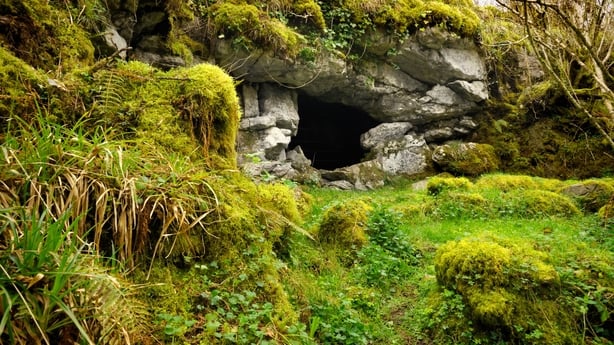
Archaeologist Dr Marion Dowd of Atlantic Technological University made the discovery in Glencurran Cave in the Burren, Co Clare
Until recently, none of Ireland's prehistoric cat remains had been radiocarbon dated, leaving uncertainty over whether earlier finds were wildcats or domestic arrivals.
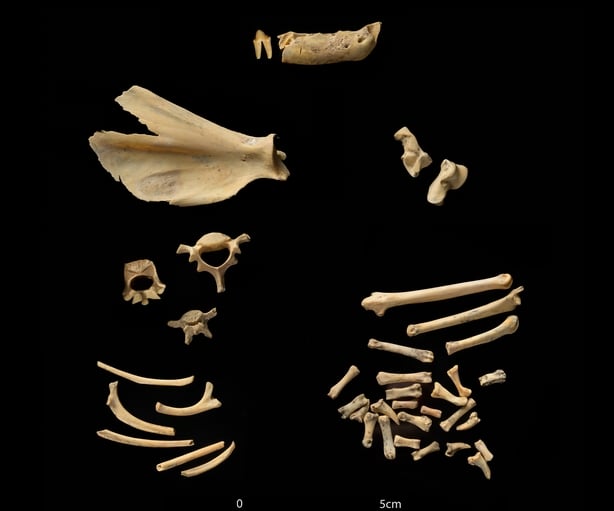
39 bones belonging to an adult wildcat that were subsequently identified (Credit: Ken Williams)
Radiocarbon dating conducted at Queen's University Belfast confirmed the remains of the species, extinct in Ireland, are more than 5,500 years old, dating to the Middle Neolithic period.
Dr Dowd discovered 39 bones belonging to an adult wildcat that were subsequently identified by zooarchaeologist Margaret McCarthy.
Ancient DNA analysis at the University of Rome Tor Vergata confirmed the animal was a male European wildcat, distinct from modern domestic cats and Near Eastern wildcats.
Dr Dowd said the breakthrough "transforms what we thought we knew about Ireland’s ancient wildlife".
"It’s important for us to build-up a database of the animals that once existed in the Irish landscape that have now become extinct.
"It joins bears, wolves and other animals that would’ve been a core part of the Irish ecosystem and landscape 5,000 years ago," Dr Dowd said.
Archaeologist James Kyle said Dr Dowd’s work is hugely significant as it pushes back the date range for this animal in Ireland at least 4,000 years.
"It’s the kind of thing that makes the hair stand up on the back of your neck. It answers a lot of questions, but it also poses a lot of questions in terms of the biodiversity of Ireland in the past.
"This is the first time we can say with certainty that European wildcats lived in prehistoric Ireland," Dr Dowd said.
Small numbers of cat bones were previously found on prehistoric sites, including the Mesolithic site of Lough Boora, Co Offaly and the Neolithic passage tomb of Newgrange, Co Meath.
The outside of Glencurran Cave in the Burren, Co Clare (Credit: Ken Williams)
Dr Dowd said that without radiocarbon dating, it was impossible to confirm the age or species of the previous archaeological discoveries.
Wildcats were once widespread across Europe but declined sharply from the 1700s due to habitat loss, hunting, and competition with domestic cats.
Archaeologist Adam Collins said the finding opens up the diversity of animals that were in Ireland during the early Neolithic period.
"I think it’s only going to get better between the scientific techniques and the opportunities that are available.
"We’re going to see a lot more of this type of work being done and hopefully painting a much clearer picture of our past," Mr Collins said.
Wildcat populations remain in Scotland and in Iberia, however, numbers of the legally protected continue to decline primarily through roadkill, poaching and habitat loss.
As the domestic cat population grew, wildcat numbers plummeted. Although similar in size and appearance to domestic cats, they are a different species.
Dr Dowd has said further radiocarbon dating and genetic analysis of discoveries from prehistoric and medieval sites would help in understanding our past.
"We’re interested in establishing when did wildcat become extinct. We don’t know the answer to that, only further analysis will determine the answer.
"It’s important because we want to understand the past landscapes in prehistoric Ireland; the animals that lived in those landscapes and the types of ecosystems," he said.
Dr Dowd’s findings have been published in a co-authored paper recently published in the Journal of Irish Archaeology.
Science has a very interesting item but, sadly, in the UK, unless you are part of the "magic circle" you will never be allowed to see the work. Free access to research data should be an actual thing rather than keeping everything secret from the "muggles"
The dispersal of domestic cats from North Africa to Europe around 2000 years ago
Editor’s summary
Tracing the origins of domestic cats (Felis catus) has been limited by a lack of ancient DNA for these animals, as well by their morphological similarity to the African wildcat (F. lybica lybica) and European wildcat (F. sylvestris). De Martino et al. generated low- to medium-coverage genomes for 87 ancient, museum, and modern cats (see the Perspective by Losos). They found that domestic cats are most genetically similar to African wildcats, although there has been widespread gene flow between wild and domestic populations. European samples that cluster with domestic cats only appear in the 1st century CE, suggesting a later dispersal of domestic cats than previously thought. Although broader sampling is needed, this study shows the complexity of population dynamics that is often revealed when looking beyond mitochondrial DNA. —Corinne Simonti
Structured Abstract
INTRODUCTION
The domestic cat (Felis catus) originated from the African wildcat (Felis lybica lybica), which is presently distributed across North Africa and the Near East. It has since rapidly expanded to achieve a global distribution. Archaeozoological and iconographic evidence points to two possible centers of domestication: Neolithic Levant ~9500 years ago and Pharaonic Egypt ~3500 years ago. Ancient mitochondrial DNA (mtDNA) data support a dual-origin model for cat dispersal, indicating an initial spread from Anatolia to Europe by Neolithic farmers ~6400 years ago, followed by a second wave from Egypt ~2000 years ago.
RATIONALE
The timing and circumstances of cat domestication and dispersal remain uncertain owing to the limited number of ancient and modern genomes analyzed thus far. Questions remain about the natural distribution ranges of African and European (Felis silvestris) wildcats in the past and their potential admixture. A recent study showed that ancient gene flow might confound the reconstruction of cat dispersal, particularly when based on mtDNA. The origin of African wildcat populations in the Mediterranean islands of Sardinia and Corsica is also elusive. Present evidence suggests that they are not feral domestic cats but instead represent a separate wildcat lineage. To address these questions, we analyzed the genomes of 70 ancient cats from archaeological sites across Europe and Anatolia and 17 modern wildcats from Italy (including Sardinia), Bulgaria, and North Africa (Morocco and Tunisia).
RESULTS
We generated a genomic time transect spanning the past 11,000 years and found that cats previously identified as carrying a F. l. lybica mtDNA clade from Neolithic and Chalcolithic southeast Europe and Anatolia, dated between 9500 and 6300 years ago, were F. silvestris wildcats whose ancestors hybridized with F. l. lybica. Ancient genomes revealed an increasing trend of African wildcat ancestry ranging from 9 to 34% eastward, from Bulgaria to central Anatolia.
The earliest cat belonging to the genetic cluster of as F. l. lybica and F. catus in Europe originates from the site of Genoni, in Sardinia (Italy), and is dated to ~2200 years ago. This cat is genetically similar to present-day wildcats in Sardinia, and they all appear to be closely related to a F. l. lybica wildcat from Morocco. All other archaeological cats from Europe and Anatolia included in the cluster of F. l. lybica and F. catus are dated from ~2000 years ago onward. They possessed the typical gene pool of modern domestic cats and shared more affinities with modern African wildcats than with their Levantine relatives. Their rapid dispersal across the Mediterranean in the past 2000 years marked a demographic expansion recorded in their maternal ancestries.
CONCLUSION
Our findings challenge the commonly held view of a Neolithic introduction of domestic cats to Europe, instead placing their arrival several millennia later. We redefine the timing of cat dispersal by identifying at least two waves of introduction to Europe. The first dispersal most likely featured wildcats from Northwest Africa that were introduced to Sardinia and founded the island’s present-day wild population. A distinct and yet-unknown population in North Africa sourced a second dispersal not later than 2000 years ago that established the gene pool of modern domestic cats in Europe.
The introduction of domestic cats to Europe.
The genomes of ancient cats from archaeological sites across Europe and Anatolia (dark circles in the map) revealed that domestic cats were introduced to Europe from North Africa starting at ~2 thousand years ago (kya), several millennia after the onset of the Neolithic in Europe. African wildcats in Sardinia originate from a distinct wildcat population in Northwest Africa
Abstract
The domestic cat (Felis catus) descends from the African wildcat Felis lybica lybica. Its global distribution alongside humans testifies to its successful adaptation to anthropogenic environments. Uncertainty remains regarding whether domestic cats originated in the Levant, Egypt, or elsewhere in the natural range of African wildcats. The timing and circumstances of their dispersal into Europe are also unknown. In this study, the analysis of 87 ancient and modern cat genomes suggests that domestic cats did not spread to Europe with Neolithic farmers. Conversely, they were introduced to Europe around 2000 years ago, probably from North Africa. In addition, a separate earlier introduction (first millennium before the common era) of wildcats from Northwest Africa may have been responsible for the present-day wild population in Sardinia.
fin summary
(c)2025 respective copyright owner
There was established trading through sea merchants and it is how a barbary macaque (baboon) got to Iron Age Ireland as a "gift" or some such -dug up on the Time Team TV series. There are (if you do not read or study or follow evidence) supposedly no wild cats in Ireland -in more modern times European wild cat types have been out in the wild and if not escapes from private collections likely released for shooting 'sport' as in England. However, the historically reported (but not believed by the established zoological hierarchy who discredited their own colleagues) was North African wild cat and there is at least one pelt of a descendent to prove it.
Romans are always given the credit!
Wild cats in the UK were shot, poisoned, clubbed and torn to bits by hounds for fun and succumbed to extinction by the 1860s -for over 100 years before that naturalists wrote that if it were not for feral domestic cats interbreeding with wild cats then the wild cats would have become extinct "hundreds of years ago". Gamekeepers, "country squires" and 'sportsmen' still kill the current generation of New wild cats (themselves hybridised) along with any other cat they see to "prevent inter-breeding with wild cats" -that inter-breeding is what has kept the New wild cats in existence.
(c)2025 respective copyright holder
Humans kill for fun and then pretend it was conservation and as a reminder of that 'fun': in the 1960s in TentsmuirForest, Fife the Red Squirrel population was "removed" and why were they "removed" (killed)? Well, it was "to see if they recovered" The 1960s also saw pine martens introduced to Galloway Forest to "control" the Red Squirrels and the claim that recent releases of pine marten control Grey not Red squirrels is a myth in itself with so many contradictions it is laughable.
Protected species status means nothing in the UK. 'Sportsmen' are already mapping out where wild cats are going to be released. Over half the UK badger population has been wiped out over bad science. Foxes should be Red Listed as their current decline is reaching new levels.
And squirrels?
1981: The original protection was granted under the Wildlife and Countryside Act 1981, making intentional acts against red squirrels and their shelters illegal.
2004: Protection was extended in Scotland to include reckless acts through the Nature Conservation (Scotland) Act 2004.
2006: Red squirrels became a Section 41 species of Principal Importance for Conservation under the Natural Environment & Rural Communities (NERC) Act.
So why are forestry companies still killing them with impunity -money? Why are private estate gamekeepers still killing them as "vermin"? Where are all of the prosecutions because it seems that everyone involved in wildlife knows this is going on but...oh. "Private property" (and money) and Royal Estates.
If you want to learn the truth about British wild cats then read the results of 40 plus years research: The Red Paper 2022 -Felidae.
In 1896 Scottish naturalists and zoologists declared that the true Scottish wild cat had become extinct by the 1860s. What we see today is nothing more than a wild tabby cat. In this work the true history and destruction of wild cats from England, Wales (where hybrids clung on into the 1940s) and Scotland is explored and after decades of research the true look of the wild cat is revealed. The "English Tiger" and "Highland Tiger" truly lived up to that name.
Dogma is finally thrown out.
There is also a look at the "New Native Cats" ranging from Asian Golden Cats, Lynx, Puma and others and the evidence leading to their being so designated. No silly press or media stories just solid facts backed up by evidence. The author acted as an exotic species wildlife consultant to UK police forces from 1977-2015 as well as cooperated with university projects on the subject.
Island cats as well as feral cats their lifestyles and problems mare also covered .
Fully referenced and including maps, illustrations and very rare photographs -some never before seen in print- make this a book for amateur naturalists and zoologists.
Seasonal Canine Illness (SCI) is a serious condition affecting dogs that occurs after walking in woodlands, primarily between August and November.
Symptoms include vomiting, diarrhea, lethargy, and abdominal pain, which appear 24 to 72 hours after a woodland walk. The cause is unknown, but it is suspected to be linked to harvest mites, though it is not the only cause for these symptoms.
While it can be fatal, prompt veterinary treatment, often involving fluid therapy, antibiotics, and anti-sickness drugs, typically leads to recovery within 7-10 days.
Animal Watch Update on the Preston Wolfdogs Found Wandering the Streets
Animal Watch is thrilled to share some uplifting news from 8 Below Husky Rescue, who have been working tirelessly to stabilise and rehabilitate three very special pups — Little Timmy, Brooke and Boo.
At today’s vet check, all three “wolfie” pups showed brilliant progress. Each has gained around 2kg, Little Timmy’s cough has finally cleared, and all three received their second vaccinations. Their body condition is improving, their tummies are settling, and although they still have a long road ahead in terms of weight, they are most definitely moving in the right direction.
Next week marks a huge milestone: the pups will be heading to their specialist wolfdog placement, a team dedicated to giving them the long-term care, socialisation and environment they truly need. The handover will no doubt be emotional — everyone at 8 Below has grown incredibly fond of these little wolfdogs — but this move has always been part of the plan. It ensures they receive the expert support essential for their future.
Their Embark DNA tests have been completed, and we’re now waiting for the results. As soon as 8 Below receives them, they’ll be shared with everyone.
A heartfelt thank you to all who have sent messages and well wishes. It’s important to note that these pups were never intended to stay at 8 Below for rehoming. Their mission was always: rescue, stabilise, provide immediate veterinary care, and then collaborate with trusted wolfdog specialists, who have also welcomed 8 Below to remain part of the pups’ journey with open invitations to visit.
Animal Watch stands firmly behind rescues like 8 Below, who step up in true emergencies and give dogs like Little Timmy, Brooke and Boo the second chance they deserve.
If you’d like to support their essential work, please consider donating to 8 Below Husky Rescue
Thank you for standing with them — and with these three beautiful pups — on their road to recovery.
We have proved via necropsies that the often cited "Adenovirus is rampant ion British foxes" spouted by rescues (who do not submit dead foxes for post mortem examination) and some vets is an incredibly false statement based on only a couple of old cases. There were over 80 foxes that underwent necropsies and not a single case of adenovirus.
The biggest killer of youngish foxes was leptospirosis -as discussed in the post giving the PME results. I now find that people at rescues are calling any fox that they get and which dies and has even mild signs of jaundice as "leptospirosis".
Jaundice can be caused by a number of things -as I have outlined more than once- and you can only say lepto was a cause of death if it has undergone post mortem examination (PME) and been tested.
Again, rescues I have been in contact with make up all sorts of reasons to not submit foxes for post mortems. The worst excuse that I have heard more than once is "It feels wrong to put it through that". It is dead. It cannot feel. It can, however, provide information on any i9llness etc in local foxes which then means vets can treat others.
Please stop stating leptospirosis and PLEASE submit your fox that dies for PME.