PayPal Donations for continued research

Tuesday, 4 July 2023

A Peek Inside The Red Papers 2022

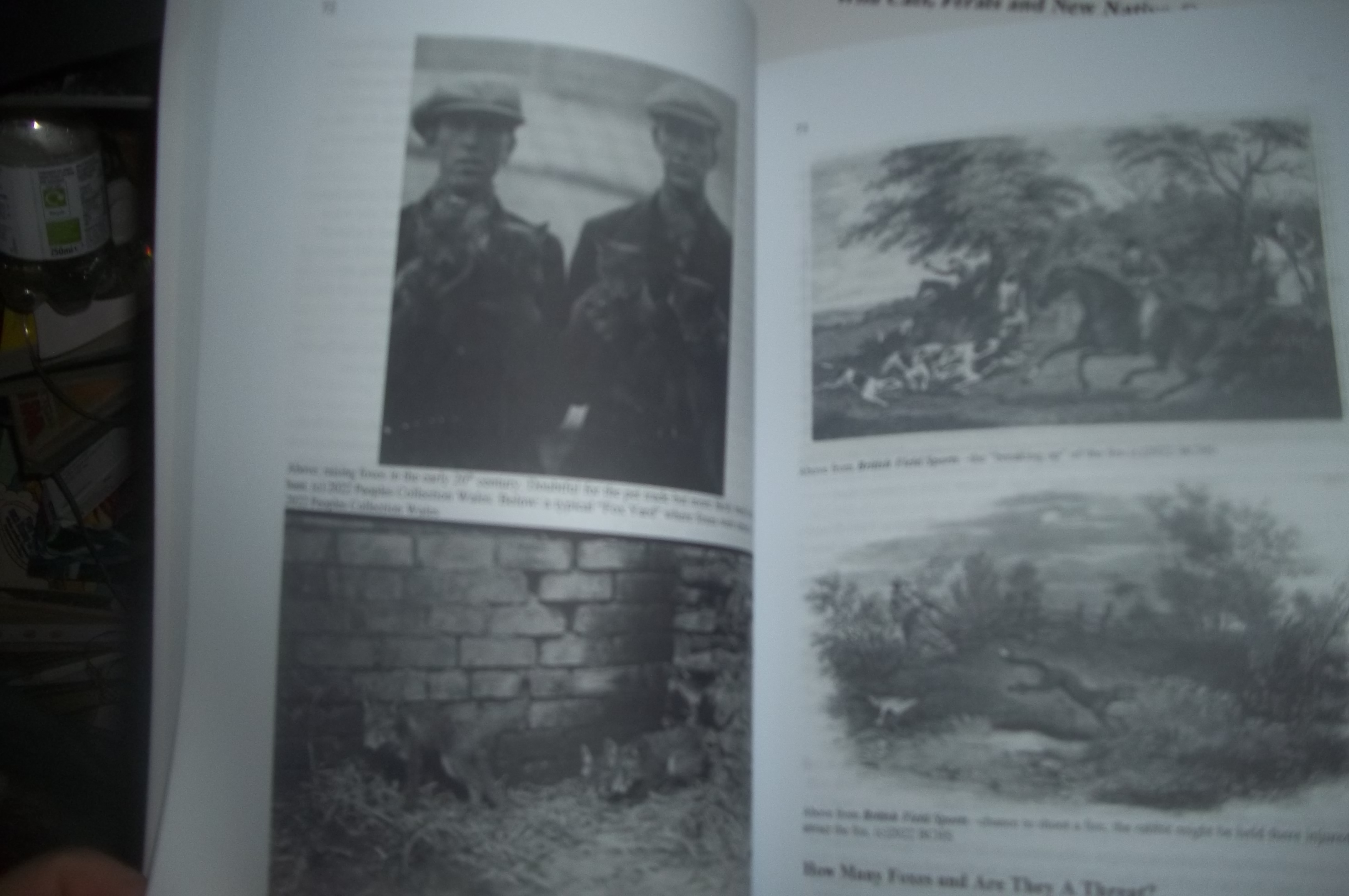
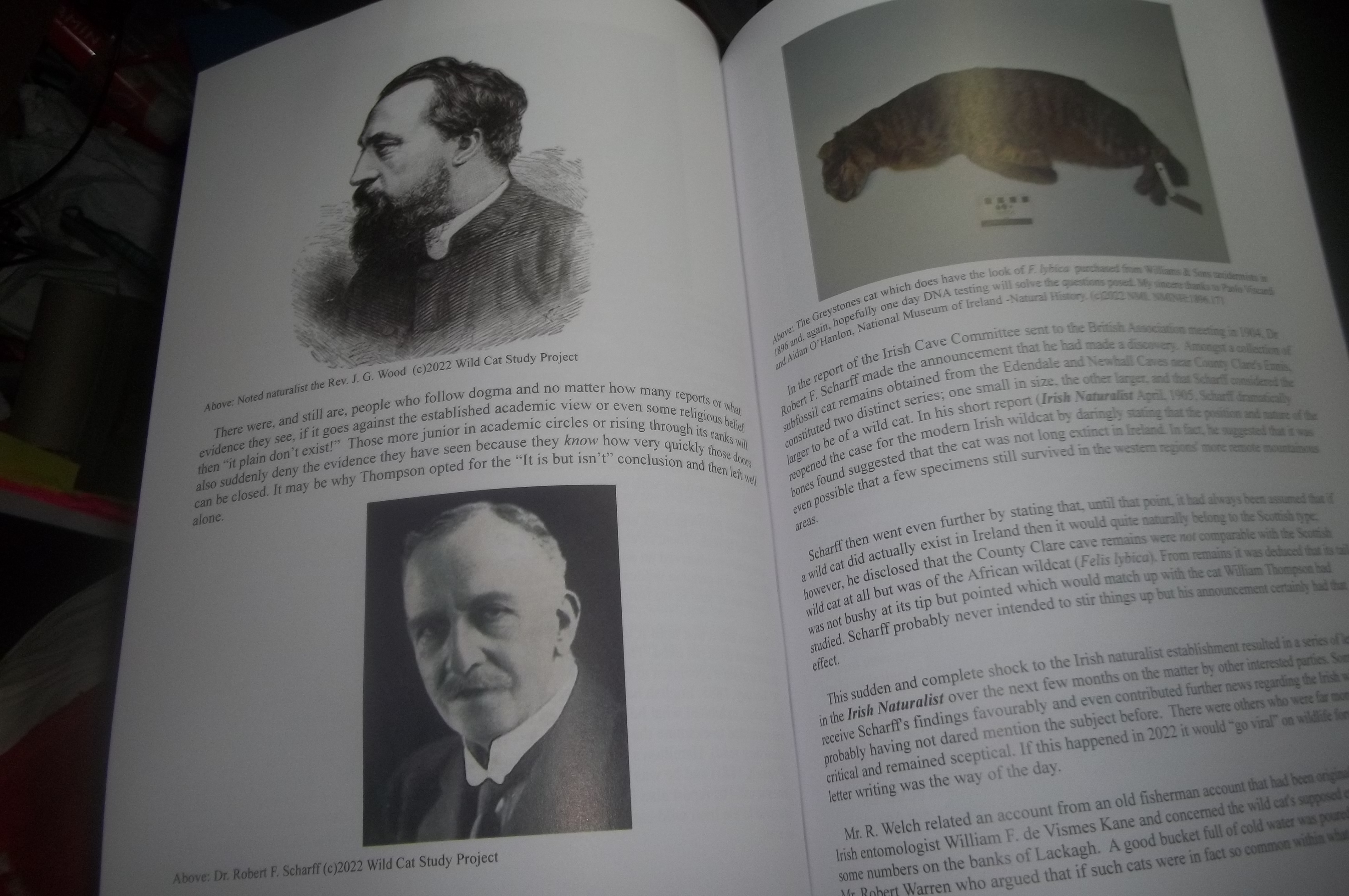
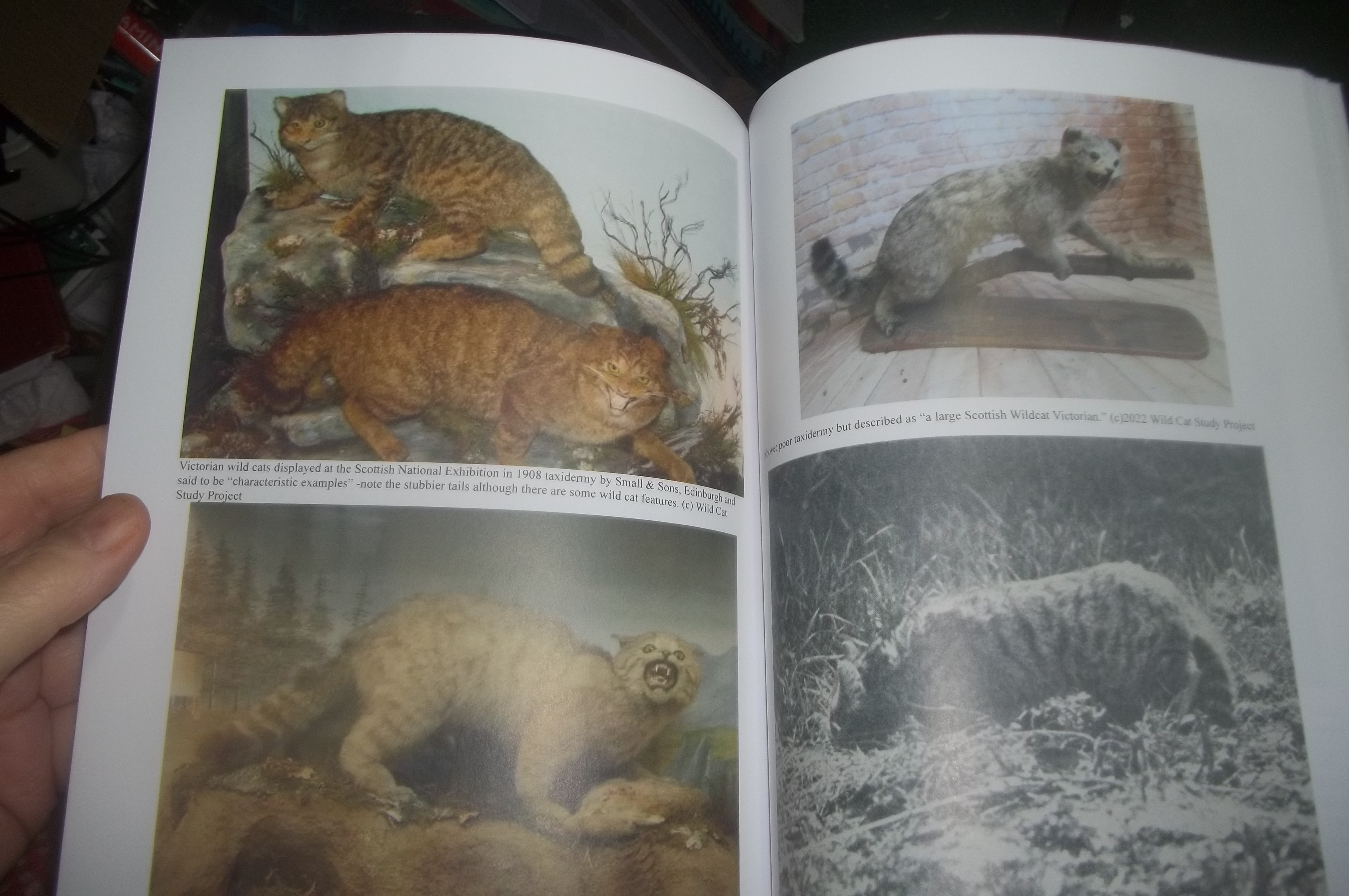
 Already hailed as British Wildlife classics here are photos of some of the pages from the two books.


Not great photos but they do a lot better in the books (if you buy one or two of them!)


361 pp
Paperback
Interior Color & Black and white
Dimensions A4 (8.27 x 11.69 in / 210 x 297 mm
£25.00
https://www.lulu.com/shop/terry-hooper/the-red-paper-2022-volume-1-canids/paperback/product-r97ywj.html?

 When the Doggerland bridge flooded the British Isles became separated from

Continental Europe and its wildlife developed uniquely. The British Isles, for the purpose of this work includes Ireland, and isolated the wolves on both became what would be island species not affected by the usual island dwarfism. These wolves, after millennia. Became “unwanted” and forests and woodland was burnt down or cut down for the specific purpose of lupicide; the killing of every and any wolf –and there was a bounty for “a job well done”.

At the same time there also developed three unique island species of Old fox from the coyote-like Mountain or Greyhound fox, the slightly smaller but robustly built Mastiff or Bulldog fox and the smaller Common or Cur fox –the latter like today’s red foxes had a symbiotic relationship with humans. These canids were mainly ignored until it was decided that they could provide fur and meat and those things earn money. From that point onward, especially after all other game had been killed off, the fox faced what writers over the centuries referred to as vulpicide –extermination through bounties paid, trapping or hunting and despite all the hunters noting that the Old foxes were nearing extinction they continued to hunt until by the late 1880s the Old were gone and replaced by the New –foxes imported by the thousands every year for the ‘sport’ of fox hunting and this importation also led the the UK seeing the appearance of mange (unknown before the importations).

The travelling British sportsmen went coyote, wolf and jackal hunting and on returning to England wanted to bring a taste of this to “the good old country”. Wolves, jackals and coyotes were set up in hunting territories from where they could learn the lay of the land and provide good sport later. Some hunts even attempted to cross-breed foxes, jackals and Coyotes.

Then there were the legendary –almost mythical– “beasts”; the black beast of Edale, the killer canids of Cavan and the “girt dog” of Ennerdale. In more recent times raccoon dogs and arctic foxes have appeared in the UK; some released for ‘sport’ while others are exotic escapees long since established in the countryside. If you thought you knew what fox hunting was about prepare to be woken up by a sharp slap to the face

and the reality that, by admissions of hunts themselves, this was all about fun and sport and nothing to do with “pest control”.

*********************


226 pp
Paperback
Interior Color and Black and white
Dimensions  A4 (8.27 x 11.69 in / 210 x 297 mm)
https://www.lulu.com/shop/terry-hooper/the-red-paper-2022-volume-2-felids/paperback/product-n48529.html?
£25.00

In 1896 Scottish naturalists and zoologists declared that the true Scottish wild cat had become extinct by the 1860s. What we see today is nothing more than a wild tabby cat. In this work the true history and destruction of wild cats from England, Wales (where hybrids clung on into the 1940s) and Scotland is explored and after decades of research the true look of the wild cat is revealed. The "English Tiger" and "Highland Tiger" truly lived up to that name.

Dogma is finally thrown out.

There is also a look at the "New Native Cats" ranging from Asian Golden Cats, Lynx, Puma and others and the evidence leading to their being so designated. No silly press or media stories just solid facts backed up by evidence. The author acted as an exotic species wildlife consultant to UK police forces from 1977-2015 as well as cooperated with university projects on the subject.
Island cats as well as feral cats their lifestyles and problems mare also covered .
Fully referenced and including maps, illustrations and very rare photographs -some never before seen in print- make this a book for amateur naturalists and zoologists.

If Readers In The UK Could PLEASE Respond To This It Would Help

 Here is how YOU can help the work without giving any money 😂

It's very simple and you can answer in comments, on the UK National Carnivore Advisory Face Book page or via email at blacktowercg@hotmail.com. It will help understand how the public sees these animals and attitudes.


What is your attitude toward carnivores in the UK such as foxes, badgers, feral and wild cats and otters?

I know that some people are very angry that wildlife such as otters find their ponds full of koi carp a snack bar. Does anyone have this problem and if so have you found a way to deter the otters?

I need to point out that Otters are designated and protected as European protected species ( EPS ). EPS are protected under the Conservation of Habitats and Species Regulations 2017. It is an offence to: deliberately kill, injure, disturb or capture them.

How do you feel about foxes?  Foxes naturally hunt and kill rats, mice, voles (not pet cats!) as well as beetles and other insects. In an urban environment where rats are common (basically the whole UK) they can control rodent populations and stop the need for rodenticides that claim the lives of pets, wild animals and birds of prey.

What do you think of foxes and what problems have you had? 

Just to make it clear that a fox den in your garden cannot be blocked or destroyed if occupied and that is the law and if you do so there is a prison sentence or £15000 fine.

Badgers -again it is illegal no matter where a badger sett is to destroy or interfere with it as badgers and badger setts (burrows) are protected under the Protection of Badgers Act 1992, in England and Wales. Have you had any problems with badgers -setts in the  garden or elsewhere? 

Do you have any feral (domestic cats gone wild) cats near you and have they caused or created any problems?

Do you think any of these species are a nuisance or do you accept them as wildlife living around us? Please let me know.

THANKS

Monday, 3 July 2023

Here is a rather depressing thought


Here is a rather depressing thought.

This morning the reported number of dead foxes has risen to 153 since January. Some of these  were submitted for post mortems as they met our study criteria. 

Personally, if the pathology people were not understaffed and under funded I would have had each dead fox we picked up undergo a post mortem even if an obvious car kill. That is common practice in some European countries where road kill is examined to see the health of the species involved and it gives a good wildlife health over view. That's Europe. This is the UK.

The alarming fact is that a large number of cubs have been victims of road traffic accidents and sadly no one stops to check but simply continue on their way. Two young cubs killed this morning but only when someone who knows about the Fox Study and to report fox deaths sees the animals do I hear about it.

We know that a large number of the foxes killed this year are vixens and some were lactating which means there were young cubs being fed that would starve (in some cases an "Aunt" fox or dog fox will bring food to cubs if the vixen is gone but no evidence of that in these cases. That means that cub mortality rate is probably higher than we expected and if the losses to traffic and disease is the same each year then we have a good explanation for the drop in numbers.

Bristol is literally a petri dish and what we find in the City is likely going to be typical of other cities and towns in the UK; pneumonia, heart and lung worm as well as various internal organ diseases. We are finding out a great deal and one fact we have is that only one of the foxes submitted had secondary rodenticide poisoning probably from eating a poisoned rat. Sudden "suspicious" deaths all tend to be RTAs -a fox looking perfectly healthy and unmarked on the outside but internal injuries and slow bleeds allowing them to move about until they collapse and die.

Oddly, local wildlife groups, of which there are a few on Face Book, are rarely the source of reports of dead foxes and badgers.  Cooperation from these groups can vary from none to very poor. Pet groups and non wildlife groups seem to be the main sources for reports. Foxes and badgers (31 dead badgers reported so far this year) do not seem to rate highly amongst wildlife groups.

As depressing as it may be it is probable, based on statistics, to think the actual deaths so far in Bristol probably totals 300. The suggestion that we might reach 1000 by the end of 2023 does not currently seem unlikely.

Sunday, 2 July 2023

I keep saying and writing that we need DNA testing Update

Since first posting this in July, 2023, I have had absolutely no interest shown by any lab carrying out DNA work. We have clearly identified Old fox types as well as Old wild cat types in the Extinct Fox and Wild Cat Museum going back to the 1830s so one might have thought it would be an excellent opportunity to carry out work that would re-write wildlife history in the UK -good publicity and a paper in it.

When I write "no interest shown" I mean that the project proposal was received by the labs but they chose to not even respond.  Sadly, for wildlife work, despite what you might hear, the UK is not the place to be. Considering that any findings might also reflect on European foxes and wild cats I did consider the possibility of contacting European labs working in DNA but I do wonder whether there would be the same reaction.

As there is absolutely no funding available to have DNA testing carried out we are at a limbo stage: we have the research and we have specimens of the animals but the next step of DNA testing is beyond our means.

____________________________________________________________________

 The main question asked by some may be "Why are you so keen to have DNA work carried out?  That question requires a very long answer and really there is no space here, however, both Red Papers (Canid and Felid) put forward the need for DNA testing.


The map below shows the Doggerland connection made what is today the British Isles and Ireland part of Continental Europe. Prior to the flooding of the area humans and wildlife could move freely around. Once that land bridge flooded what was here was here and had to develop to the habitats on an island.

Once Ireland separated from Britain its wildlife and people also had to develop to the isolated environment.


Normally, it is assumed that large animals would develop "island dwarfism" so that they are smaller and fit into their environment better. This is looking at mainland Britain (before tribal then national boundaries) as though it is a very small, cramped place which is a mistake many tend to make.

Britain had ancient woodlands and forests which, despite modern claims, we have not restored.  Most forests these days get planted for one thing only -commercial timber. Back in time forests would have been the habitat of many animals and amongst those would have been wolves and there were plenty of prey species such as boar, deer, rabbits and so on.


Above: some areas we now know were the territories of the large Old British Greyhound/Mountain fox. This is currently being updated.

Wolves in Britain and Ireland were not affected by island dwarfism and the few remains studied shows that Old wolves on the two islands were large -in fact arctic wolf like in size. this was why the Irish bred the much acclaimed Irish wolf hounds so that they were large and fast enough to deal with wolves.

Forests were cut down and burnt simply to drive out wolves to kill/hunt and not simply for agriculture. It has to be accepted that people of that time were very destructive (not much changes) and to try to cleanse what was done by stating it was all for "agricultural development" is crass. Any other animals in the forests were driven out so also "good sport" (for the lords who demanded that some wolves be left alive for their 'enjoyment') or killed to claim financial bounties.

The few wolf remains that still exist have, as far as I can ascertain from museums, never been DNA tested -dated, yes, but no DNA samples. Wolves when killed were usually beheaded for decoration purposes or, commercially (and there was a massive trade of wolf skins coming from Ireland to England) the bodies were skinned and remains thrown into wolf pits of which there are many in England but none have been excavated which means that, where land not built over, there are literally thousands of wolf bones that would help in research.

Was the British-Irish wolf sub-species of the arctic wolf ? If the Irish wolf was separated from Britain it would also be a unique island species. It would be interesting and, natural history wise, important to find out.


We then have the British wild cat which, like the wolf, fox and badger were hunted for 'fun' and bounty profit. The evidence is that wild cats lasted longer in England and Wales than is believed with some very 'authoritative' inaccurate dates given for the species extinction. Hybrids in taxidermy are not that rare and if you have a hybrid then somewhere there had to be a genuine wild cat.

Zoologists and naturalists in Scotland were very clear in 1897 that the true Scottish wild cat had died out in the 1860s and this is backed up by taxidermy as well as other authoritative contemporary accounts including by the man who was the expert on wild cats at that time after 40 plus years of study.  

Even the specimens from the 1830s were not the true wild cat, or original wild cat, as for thousands of years the species had only been kept alive by inter-breeding with feral domestics with the best date for the start of this being the Roman period in Britain. The 1834 pair of wild cats shot by John Colquhoun and others for that period are themselves hybrids and unless we can find bones of pre-Roman period wild cat bones (unlikely?) we will never know true wild cat DNA. However, we do know that they had maintained their large size (dwarfing the current wild tabby) in some areas -including Wales in the late 19th century.

DNA testing would answer a lot of questions and possibly show which cat species the British wild cats interbred with (my hypothesis is that originally domesticated African wild cats).  We know that, despite the statements to the contrary, there was an Irish wild cat and they were seen and recorded by Irish naturalists. At some point European wild cats were introduced to Britain and even, based on testimony, Ireland. We do know that they were released into hunting areas to "repopulate" an area. Again, Red Paper Felids covers this in more detail. 

Then we come to the foxes. There was, mainly during the late 18th but more intensely during the 19th century, polite but angry notes and comments that the three types of foxes in Britain -the Greyhound/mountain, Mastiff and Cur- were not three different species but different types of foxes. Well, at the time some zoologists and naturalists believed that foxes and domestic foxes could mate. There was none of the technical knowledge we have today; if someone claimed in 2023 to have a genuine fox-domestic dog hybrid a simple DNA test would reveal the truth. Very few if any people were arguing that the three types of Old foxes were different species.

Some argued that mountain/greyhound foxes had certain areas it lived and survived in. There was food, water and plenty of areas to raise cubs in. It is now known after over four decades of study that the Mountain/Greyhound fox literally filled in the niche taken up in Europe by jackal and in the United States by the coyote. It was large and may have moved around in a way similar to coyotes. Today we would say that this fox had undergone adaption to live  in the environment it chose.

The same is true of the Mastiff  which may also have been known as Hill foxes which adapted to living on the hills and mountain slopes and only venturing down into lower land in bad winters when food was scarce.  The small cur fox had a symbiotic relationship with humans -the old food and waste dumped near villages and towns provided food discarded as well as food attracted -rats and mice.

Each of the types had undergone environmental adaption until their eventual extinction in, again, the 1860s (though a few very isolated Old foxes may have clung on a little longer in inaccessible areas) along with the Old red squirrel and other species. Even the famous naturalist-'sportsman' John Colquhoun realised and later wrote in his books that fauna he had killed off along with others were gone and he was very saddened by this.

DNA on these foxes would likely come back as Vulpes (same species) but of a unique island species.  With Ireland we have a problem. Firstly, we have found no examples of pre-1830s mountain fox taxidermy. There are probably some somewhere but people just do not know what they have and museums tend to have post 1900 foxes only. The second problem is that masters of various British hunts sent gift mountain foxes to Ireland for hunting. It would be necessary to eliminate which taxidermy (if we ever find any) was pre-imported mountain foxes and which were native to Ireland.

We know that certain areas of Ireland (I refer to the entire island not "Northern Ireland or Eire) were regarded as mountain fox territory and the locations crop up in many accounts of the time in newspapers and journals.

DNA could help answer questions.  Where DNA testing in modern times has been carried out in England the results are of European red fox. Really, the expensive testing is negated because it is a matter of public knowledge from the 1700s up to the early 1900s that thousands of foxes were imported from Europe each year to be sent to fox hunting territories and after at least four centuries it would be near impossible to not find European vulpes DNA. It has to be remembered that fur farms, etc., also release North America Red Foxes (NARF) and the traits from these are clearly seen in photographs of UK foxes today.


(c)2023 British Fox Study. Taken from the UK photo data base this fox has probably got North American Red Fox DNA and was of quite large size.

Just as we find European red squirrel DNA in British squirrels, certain deer and other 'native' animals it is because, having been wiped out and there being a need to continue the 'sport', thousands were caught in Europe and imported to the UK. The 17, 18th and 19th centuries saw a huge trade in importing animals both European as well as exotic from Asia, Africa and so on. Importing foxes, wild cats, etc was no problem; shorter journey, less expenditure on food and keep and straight off the ship and sold on.

Therefore we need to get much older examples of foxes and the older the wild cat specimen the better. We know where there are rare Old wolf remains so a DNA preliminary study ought to give us a lot of answers and then all the British wild life books will need to be re-written and dogma itself become extinct.

A ramble I know but I hope it explains why I keep saying and writing that we need DNA testing.


jjjj

Saturday, 1 July 2023

Foxes In Singapore?

I was asked whether there had been or were foxes in Singapore. I had thought that in Colonial days there might have been fox hunting but foxes are not listed in the catalogue of Singaporean wildlife now made extinct due to pollution, continuous land grab to build and so on.

A Dhole (c)2023 respective copyright owner

The Dhole (Cuon alpinus) was present but is considered now made extinct in Singapore and the southern forests of the Malaysian peninsula though you can see some at Singapore zoo.

The number of species endangered or that have died off in Singapore shows the truly negative effect humans have on island species especially when money is counted as far more important.

Friday, 30 June 2023

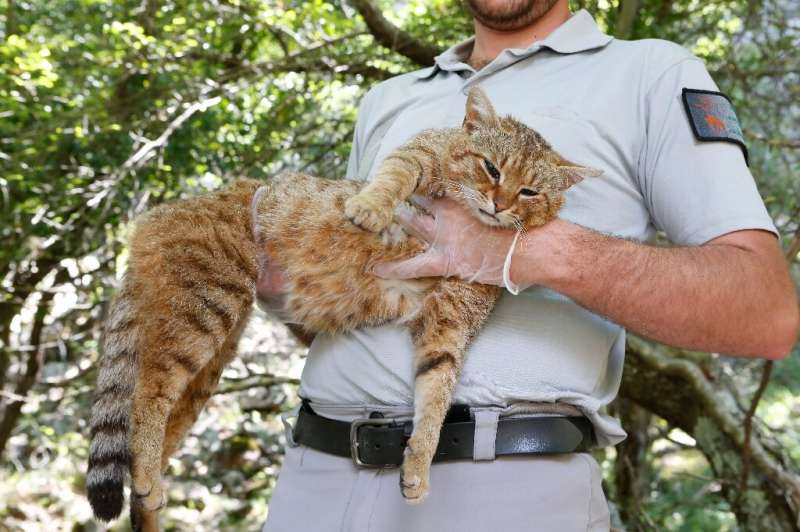
Mysterious Corsican 'cat-fox' revealed as unique species -Who Would Have Guessed?

 Back in 2000 I published my paper on Wild Cats, Ferals and Hybrids which was only 20_pp as opposed to the recent Red Paper 2022 vol. 2 Felids which is 226pp with colour photos, etc..

During the late 1990s I had been corresponding with zoologists specialising in felids and particularly island cats. Looking at the scant reports over the years -many did not believe that there was a wild cat there and that all the stories were merely fantasy- I speculated that the Corsican wild cat could be a unique species which did not go down to well (though I must make it clear that everyone was absolutely polite!).

In the UK we had tried, with a university, to DNA test alleged "big cat" evidence and I did offer to ask the university if it might be interested in DNA testing any samples that might be acquired. This, it seems, made me a nuisance (or it might be that everyone was very busy and DNA was a very new tool at the time).

To see, 23 years later, that my hypothesis was correct. I want to jump up and down shouting "Yah-boo! Sucks!" at certain people but I am far too old and laid back these days.

Here is the news item:https://phys.org/news/2023-03-mysterious-corsican-cat-fox-revealed-unique.html?fbclid=IwAR2Er9fhKH69bimU7iI-9OjFPsB697SC_b0gEdRZjKXSHTQdL1UjOydjV5c

Mysterious Corsican 'cat-fox' revealed as unique species


New genetic analysis has 'revealed a unique genetic strain to the wild cats' found in the remote forest undergrowth of northern
New genetic analysis has 'revealed a unique genetic strain to the wild cats' found in the remote forest undergrowth of northern Corsica.

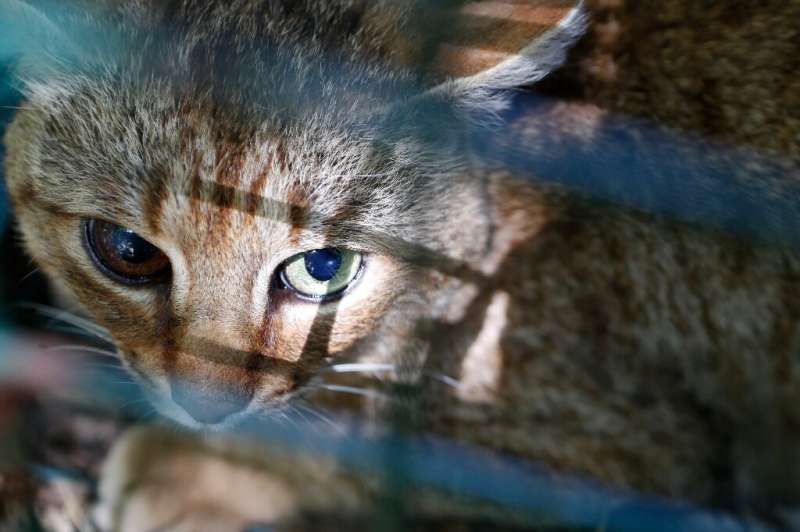
The elusive striped "cat-fox" familiar mostly to Corsican shepherds and as a source of intrigue to scientists, is indeed its own species specific to the French Mediterranean island, the French office for Biodiversity (OFB) announced Thursday.

New genetic analysis has "revealed a unique genetic strain to the wild cats" found in the remote forest undergrowth of northern Corsica, it confirmed.

Genetic sampling clearly distinguishes the ring-tailed Corsican cat-foxes from mainland forest felines and , said the OFB in a statement.

While resembling house cats in some ways, the cat-fox earned its name from its length—measuring 90 centimeters (35 inches) from  to tail—and its distinct black-tipped, ringed tail.

Other distinguishing features include the stripes on the front legs, "very dark" hind legs, and a russet stomach. The dense, silky coat is a natural repellent for fleas, ticks and lice.

The inconspicuous feline finally became part of a concerted research effort—after years of playing a game of cat and mouse—when one was unexpectedly captured in a local chicken coop in 2008.

But it has long been part of local folklore.

"The cat-fox is part of our shepherd mythology," Carlu-Antone Cecchini, head of the forest cat mission at the National Hunting and Wildlife Office, now part of the OFB, told AFP in 2019.

Genetic sampling clearly distinguishes the ring-tailed Corsican cat-foxes from mainland forest felines and domestic cats
Genetic sampling clearly distinguishes the ring-tailed Corsican cat-foxes from mainland forest felines and domestic cats.

"From  to generation, they told stories of how the  cats would attack the udders of their ewes and goats."

The discovery of a unique genetic lineage is an essential step towards ensuring proper protection and conservation for the .

Thursday, 29 June 2023

Extinct Fox and Wild Cat Museum

 I have previously (quite often) referred to The Fox Museum owned by my colleague LM. It is a private museum not open to the public but has the distinction of having taxidermy of Old British fox types as well as extinct Scottish wild cat and I spent five years asking museums around the country if they had similarly dated specimens -the Natural History Museum London does not and neither does the National Museum of Scotland.

The museum is unique. 


But the question arises as to what it is hoped to achieve with the fox masks (mounted heads) and full body taxidermies? Really the same as with the Old wild cats: to find some way of having DNA testing carried out to see how the species varied from those in Continental Europe and whether they were unique sub-species or not. The hope is to some day acquire DNA from the few remains of British wolves we know of and also ascertain their lineage.


 From there the work can continue to re-write natural history books though that is going to be a hard fight considering that many establishments and organisations are acquiring funds and donations for promoting dogma but it is hoped that true scientific (open) minds will seek to take part in the research.

Sadly, despite trying since 1976, the research projects have all been "out-of-pocket" as no funding has been available for such long term projects and that still applies despite our findings and it is why DNA testing has been beyond our reach.

So, now you know what the museum is for and any questions please ask.


An Appeal To UK and European Collectors and Museums

    There is increasing evidence that there was an Old West European fox before the red fox ( Vulpes vulpes ) migrated from the  East. The e...